



Interview with Herman Deviashin, a tattoo artist based in Spain, formerly archivist at the Gulag History Museum. Herman Deviashin is currently teaching the history of Russian tattoos with fellow researcher Alexander Morozov. H. Deviashin’s work is also known online as he is the founder of the instagram account @russiantattoohistory: a hub acting like a Russian family album where anyone can submit their personal archives.
The history of Russian prison tattooing is often associated with the work of Arkady Bronnikov whose police archives became internationally known after the collapse of the Soviet Union. Yet to regard Bronnikov as the first serious observer of the phenomenon would perhaps be reductive. According to Herman Deviashin, another figure both more elusive and more legendary occupies a central place in the cultural memory of Soviet tattoo history: Danzig Baldaev.
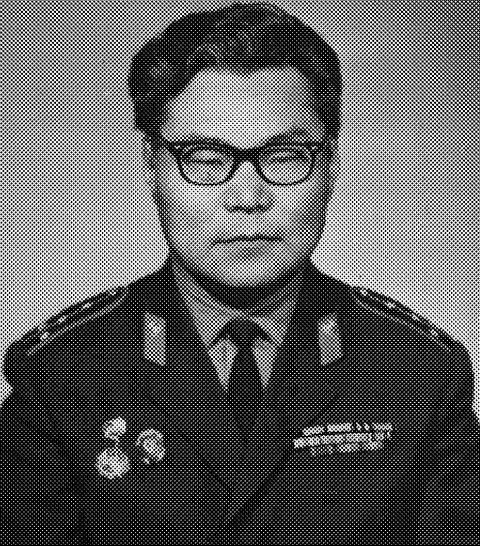
Baldaev’s biography itself resembles a fragment of Gulag mythology. As a child, he was reportedly sent to a camp for the children of “enemies of the people” after his father, Sergey Baldaev, a collector of Buryat folklore and language, was denounced during the Stalinist purges (1930s). According to Baldaev’s own recollections, it was precisely his father’s passion for collecting oral traditions that inspired his later efforts to document prison tattoos and criminal argot. Beginning in the late 1940s, while employed as a prison guard at the infamous Kresty prison in Leningrad, he secretly recorded tattoo designs and their meanings, writing his notes in the Buryat language to avoid accusations of engaging in “anti-Soviet activities.”
In interviews given decades later, Baldaev described some of the earliest prison tattoos he encountered: images of the Solovetsky Monastery, surrounded by skulls and shattered crosses. These motifs referred directly to the Solovki Special Purpose Camp (SLON), often considered one of the foundational spaces of the Soviet Gulag system. The history of this camp is crucial to understand the symbolical weight of the Soviet agenda and, as a consequence, that of prison dissidence.
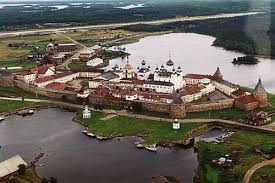
The Solovetsky complex was built on an island in the White Sea in the early 15th century. What started as a secluded monastery soon turnt into one of the most flourishing intellectual centres of the Orthodox Church. By the early 17th century, the community grew financially and theologically independant from Moscow, refusing the reforms implemented by Patriarch Nikon, and thus becoming a stronghold for Old-believers. When the Bolsheviks seized power in 1917, the monastery was soon disestablished and turnt into a prison camp where intellectuals (many of whom were theologians, priests and monks) threatening the party were gathered. As such, Solovki seems to be the place where prisonners crystallized the symbolics of a criminal tattoo culture that extends further back—to the port city of Odessa and the underworlds of the late imperial period. H. Deviashin recalls: “I even found a photograph of an Odessa housebreaker from the 1920s with an image of Lenin on his chest (Leader of the October Revolution—the abbreviation spells out V.O.R., which means ‘Thief’ in Russian).”
Religious imagery
Given such context, it seems all the more interesting how religious imagery occupied a central place within this visual language. Churches, icons, Madonnas, crosses, and biblical symbols appeared not as signs of conventional piety, but as gestures of defiance against the militant atheism of the Soviet state. As Herman Deviashin explains, the logic was simple: “We will put what you forbid on our mortal bodies.” Prison tattoos thus became a form of embodied resistance, transforming the skin into a counter-space of memory and protest.
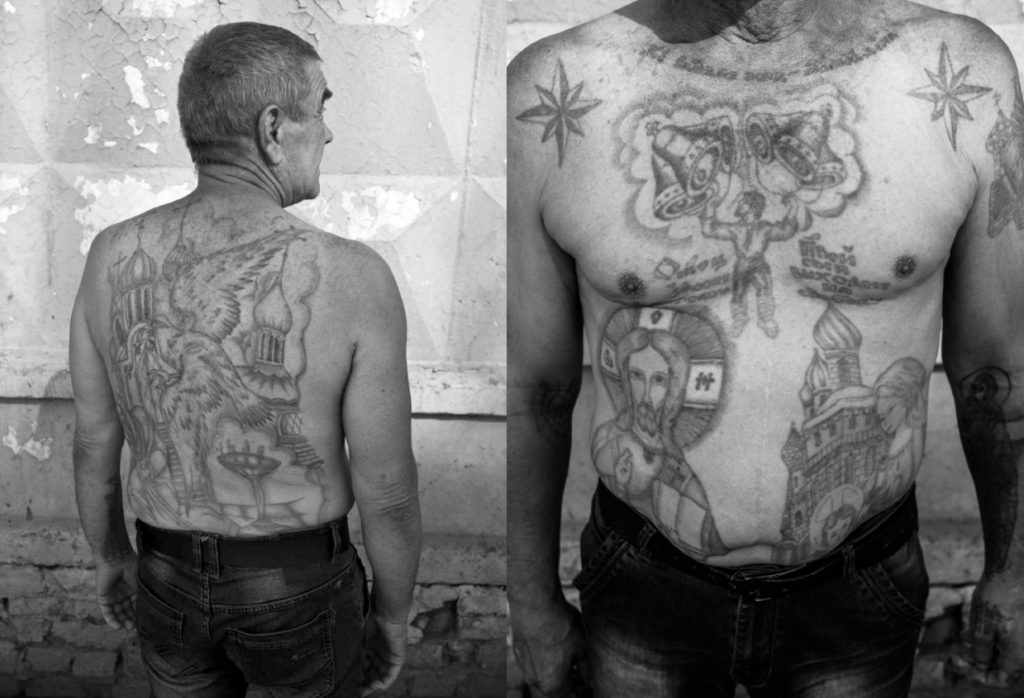
There existed, moreover, a curious ambiguity in the relationship between the criminal world and religion. Herman Deviashin continues : “There is a legend that during the Solovki ecumenical council (1925-26), the criminal underworld supported religious representatives, though, of course, the thieves themselves were not believers” but solely through a shared antagonism toward state authority. Religious tattoos therefore simultaneously expressed rebellion, superstition, fatalism, and the hope—however distant—of divine mercy.
Symbols such as the thieves’ stars, often interpreted as variants of the Star of Bethlehem, reveal the hybridization of Orthodox iconography and criminal symbolism. As H. Deviashin puts it: “One should not forget that prison inmates form a society ruled by force and lust. So most likely, the image of Mary was not an amulet against hardships, but rather an image of a woman, and imagination would fill in the rest…”
On a more personal level, as H. Deviashin explains: “much in the concept of prison tattoos is borrowed from religion”. Aside from pictural depiction, many tattoos read as prayers (“God forgive your servant …”): “The body was perceived as a temple, and many ancient temples have numerous inscriptions scratched onto them. Similarly, memorable events on a prisoner’s body, merging into a unified treatise on human life, die along with the flesh.”
Figure of tattoo artists
Although prison tattoos tell a lot about its bearer to the other inmates it does not say much about the artist himself. Indeed, tattoo artists occupied a peculiar status within the penal hierarchy. As Herman Deviashin puts it: “According to prison codes (ponyatiya), a tattoo artist could not take payment for his work, but he held a special, privileged status and lived quite well.” Paid indirectly through tea, cigarettes, and protection, they often became indispensable figures within prison society. H. Deviashin consitnues, “By certain arrangements, including those with the guards, [a tattoo artist] could be transferred to a specific prison where a high-ranking thief (vor v zakone) knew about the tattooist’s high skill and wanted to get a tattoo from him.” At the same time, they remained trapped by their own reputation: many were forced to work at night, hidden from guards, and some reportedly committed minor crimes after release simply to return to prison and continue tattooing.
Carceral tattoos have been largely documented but little is still known about tattoo artists themselves. Yet, their identity could very much enable us to understand a bit more about the weight of Church norms among the Gulag system. As an example, in the Orthodox faith, monks are sometimes spiritually trained before being allowed to paint icones. This sole fact let us wonder whether or not any tattoo artist could draw such symbols and what was the spiritual relevance of their art.
Aside from these theological considerations, it is cerain that tattooing itself became a medium of communication and social inscription. According to H. Deviashin, “The importance of the tattoo is also highlighted by the fact that it became a way of transmitting information; sometimes a message could be tattooed on a person who was being sent to another prison, making him a sort of ‘living letter’.” Others, particularly low-status inmates, functioned as experimental surfaces upon which tattooists demonstrated their technical skill before working on elite criminals or “thieves-in-law” (vory v zakone). Deviashin continues: “Such people usually had many unfinished tattoos on them, since a tattoo holds value only in its completed form.”
Quick round-up of Soviet tattoos
The religious dimension of prison tattooing cannot therefore be separated from the broader political and social history of the Soviet Union: criminal tattoos changed as tattoing techniques and society changed. Religious imagery itself remained remarkably fluid: Orthodox churches coexisted with mosques and secular motifs whose meanings constantly shifted within prison society. As time went on, the religious imagery seems to have disappeared “Gradually, the image of churches was replaced by images of castles, which have similar towers that could indicate the number of years served, just as it is traditionally done with domes.”
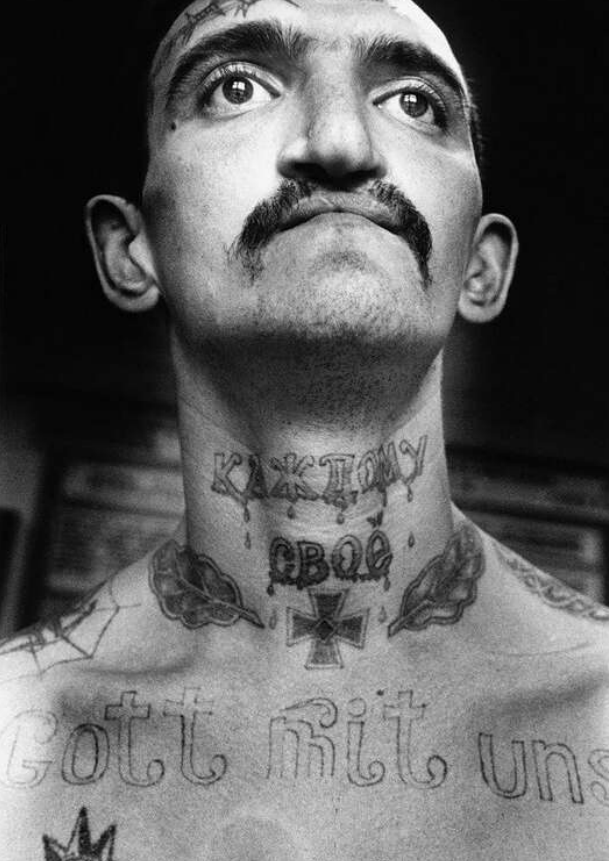
“Starting from the 1920s and 30s, these were primitive images made with a needle or a sharpened nail. These included stars, portraits of Soviet leaders, a tulip, a baklan (a hand holding a knife), animal snarls, and inscriptions […] I have encountered a tattoo resembling striped socks, where each black stripe represented a year served. During World War II, an internal war began in the prisons because inmates started being sent to the front lines, and cooperating with the Soviet regime was unacceptable. Returning from the front after the war ended, most found themselves back in camps and prisons, but now the old thieves would not accept them. However, these people returned changed, possessing combat experience, which sparked the so-called ‘Bitch War’ (Suchya Voyna) that lasted until the 1950s. During this period, even authoritative thieves began refusing to get tattoos so they couldn’t be identified. The criminal world split into ‘red’ and ‘black’ zones.” Those who kept on using tattoos as a langage would then begin to use nazi symbols (most noticeably swastikas but also Third Reich’s military decorations, Gott mit Uns motto, etc.) as an act of dissidence against the Soviet regime that had just fought Hitler’s troops.
“From the 1960s, thanks to the mass appearance of Sputnik mechanical shavers, tattooing gained momentum because a machine for application could now be assembled anywhere since shavers were allowed in prisons. In the same period, the military began drafting people with a prison past, which gave rise to hazing (dedovshchina) in the army. However, despite the ban by the Soviet authorities, the tattoo tradition was preserved the entire time in the navy, and parallel to it, there were patriotic tattoos—amusingly featuring 5-pointed stars, images of howitzers, anchors, and Stalin himself, but with a completely different meaning.
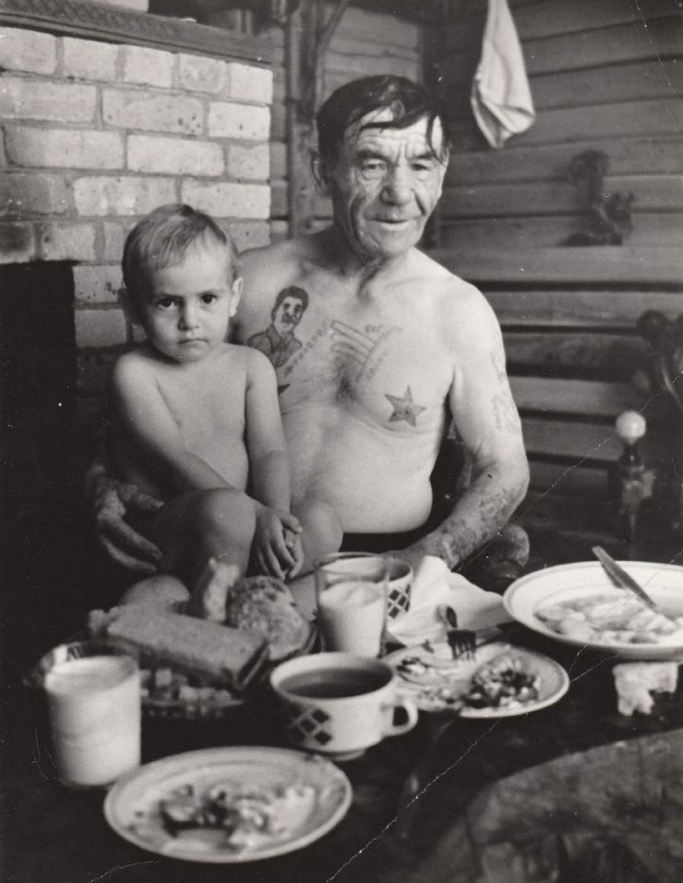
The 1970s and 1980s changed a lot; now drugs (heroin) from Afghanistan appeared, leading to many storylines related to drug addiction. Commercial and monetary relations also emerged. This was further influenced by Andropov’s policy, who, following Reagan’s principle, began a fight against organized crime, resulting in maximum-security prisons for those sentenced to life or under severe articles. It seems to me that authentic tattooing died during this time, but the image itself became highly detailed and technical. Rotary motors appeared, which didn’t need constant winding, allowing artists to work faster and produce more. Tattoos began to resemble the covers of crime novels: naked women, weapons, crosshairs, cars, images of dollars, etc.”
Conclusion
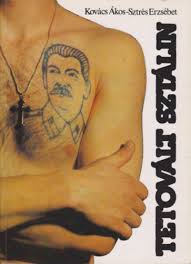
In other words, as time passed, the visual complexity of tattoos increased, but their symbolic coherence weakened. By the 1980s, tattoo imagery increasingly reflected mass culture rather than the older moral codes of the thieves’ world. The memory of this disappearing culture nevertheless survives through archives, photographs, and private collections. Baldaev’s work became internationally known only at the very end of the Soviet period, notably through the Hungarian publication Tetovált Sztálin (Tattooed Stalin), written by the ethnographer Ákos Kovács and the Russianist Erzsébet Sztrés.
Today, however, research on Russian prison tattoos remains politically sensitive. Access to archives is often restricted, and the topic itself occupies an ambiguous place within contemporary Russian memory politics. The closure of institutions such as the Gulag History Museum illustrates the growing difficulty of publicly engaging with the visual and material legacies of Soviet repression. Russian prison tattoos thus stand at the crossroads of art history, political resistance, religious symbolism, and subcultural memory. The closeties found between Gulag’s roots and religious repression call for indepth studies that would fall under the realm of practical theology.
Diane Niquin